
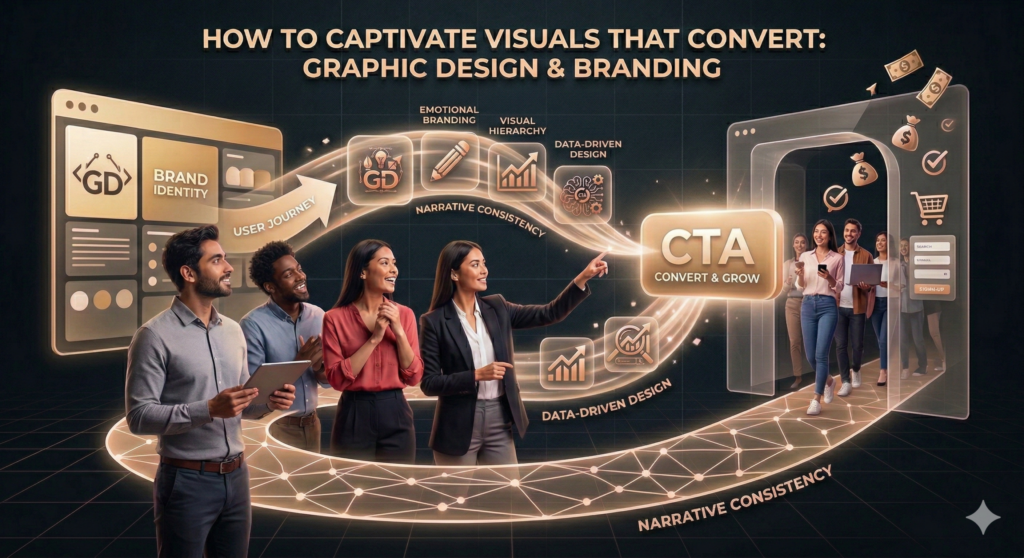
Crafting Graphic Design and Branding That Convert visuals
Introduction
In the modern digital landscape, graphic design and branding go far beyond simply making a business look attractive. They form the foundational visual language that communicates a company’s core values, builds immediate trust, and ultimately drives user action. When branding is executed effectively, it doesn’t just decorate a digital ecosystem; it organizes it, making the path from discovery to conversion feel natural and inevitable. Captivating visuals that convert are rooted in strategic psychology, ensuring that every color choice, typography pairing, and layout decision serves a specific business objective.
Building a Cohesive Brand Identity
A brand is much more than a logo; it is the gut feeling a consumer has when they interact with a business. To create visuals that convert, you must establish a cohesive brand identity that resonates emotionally with the target audience. This means developing a strict set of visual guidelines—encompassing specific color palettes, font families, and imagery styles—that remain identical whether a user is looking at a social media post, a business card, or the hero section of a website. When a brand’s visual identity is perfectly consistent, it reduces cognitive friction, builds professional credibility, and makes the consumer feel secure in their decision to engage.
The Psychology of Color and Typography
Every visual element triggers an automatic psychological response. High-converting graphic design leverages this by carefully selecting colors and typography that align with the desired action. For instance, while certain shades of blue evoke trust and security (ideal for corporate or financial sectors), vibrant warm colors like orange or pink can create a sense of urgency or creative energy. Similarly, typography dictates the tone of the conversation. A clean, modern sans-serif font might communicate cutting-edge innovation, while a classic serif implies established authority. By aligning these psychological triggers with the brand’s core message, the design does the heavy lifting of persuasion before the user even reads the copy.
Designing for the User Journey
Beautiful branding only converts if it is applied strategically to the user journey, particularly within website development and landing page design. Captivating visuals must guide the user’s eye effortlessly toward the primary goal. This involves mastering visual hierarchy—using size, contrast, and strategic negative space to highlight value propositions and make Call-to-Action (CTA) buttons unmissable. A successful design anticipates how the user will scan the page and places the most critical visual cues exactly where they need to be to encourage that final click, sign-up, or purchase.
Anchoring the Digital Ecosystem
Ultimately, converting visuals are those that successfully anchor an entire digital ecosystem. From the first touchpoint on a graphic-heavy social media ad to the final checkout screen, the design must maintain a continuous narrative. If the visual quality drops or the branding shifts at any point in that ecosystem, the illusion is broken, trust is lost, and the conversion fails. By treating graphic design and branding as a holistic strategy rather than isolated tasks, you create an immersive experience that naturally turns passive observers into active, loyal customers.